

Despite having a significant visual impairment, the fact that I also have a fit, healthy and lively collie means that I get around a fair amount. And I used to get around just as much with my old dog, Sheba.
It will have been 13 years now that I have been walking locally and have been reliant on public transport to get further afield. And I have seen some huge changes in those years. There used to be some really lovely recreation spaces in this corner of the Wirral. But now, many are becoming overgrown and neglected, awash with litter and, quite frankly, far less pleasant places to be. The loss of open spaces is slowly forcing different groups of people into the same ever-dwindling spaces and causing friction and unpleasantness.
Let’s take a walk around some of the places I take Mabs for a walk:
From the Cliff to the Dips
In New Brighton, between the Dips and the railway line, there is (or used to be) a path from the Cliff to the path that leads to Sea Road. This used to be cleared a couple of times a year, but it hasn’t been for a few years now, as far as I can remember. I walked along it today (early September 2024) to get a few photos for this post and I really had trouble finding the path at all. Next year, it will be gone.
Here are a couple of the photos I took today:
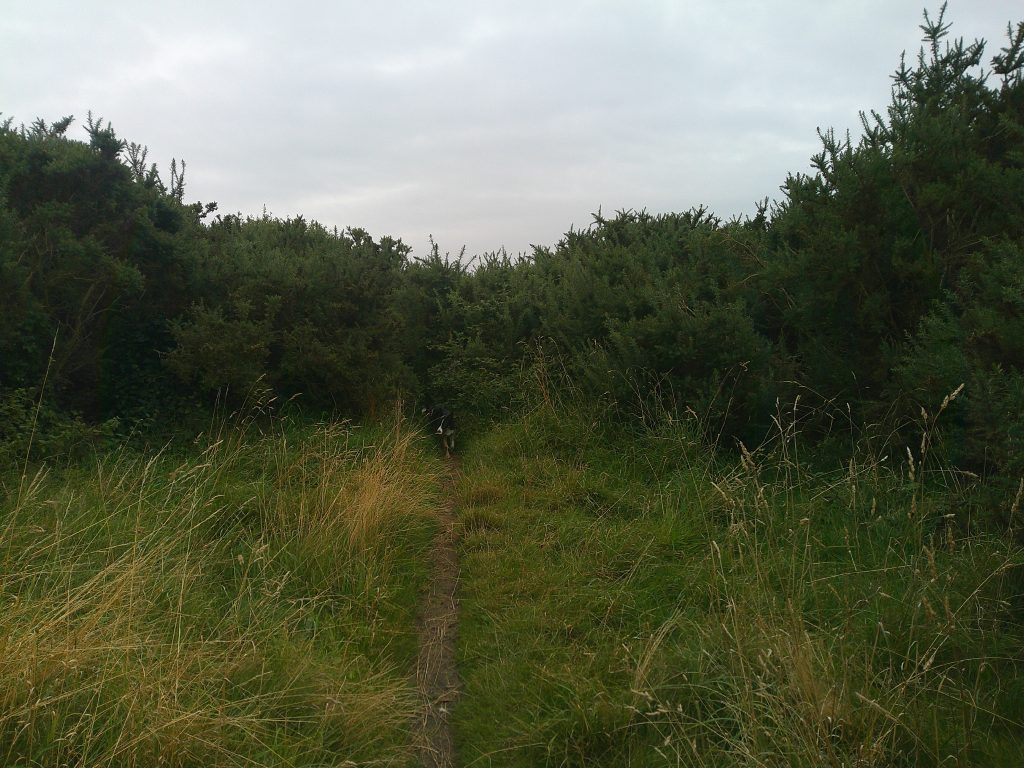
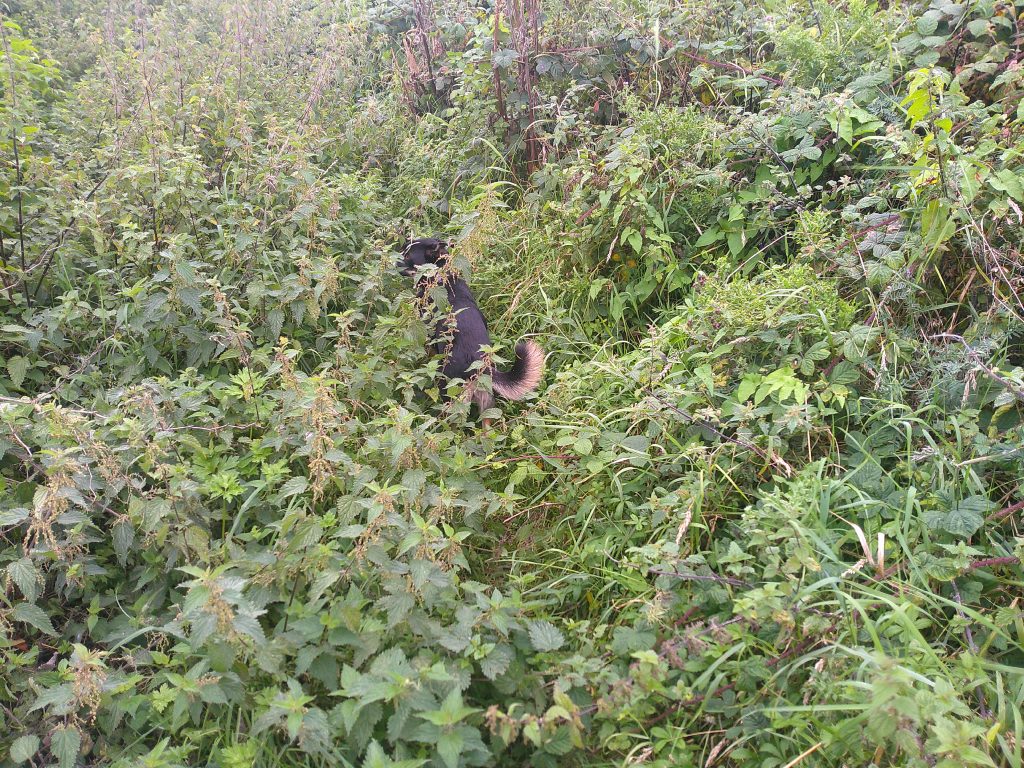
For many years now, the end of the path has been engulfed by Japanese Knotweed. I know for a fact that the Council have been told about this regularly, and I did so myself a few years back. About 4 or 5 years ago, the area was cleared, but simply chopping knotweed down does not solve the problem. It has returned with a vengeance:
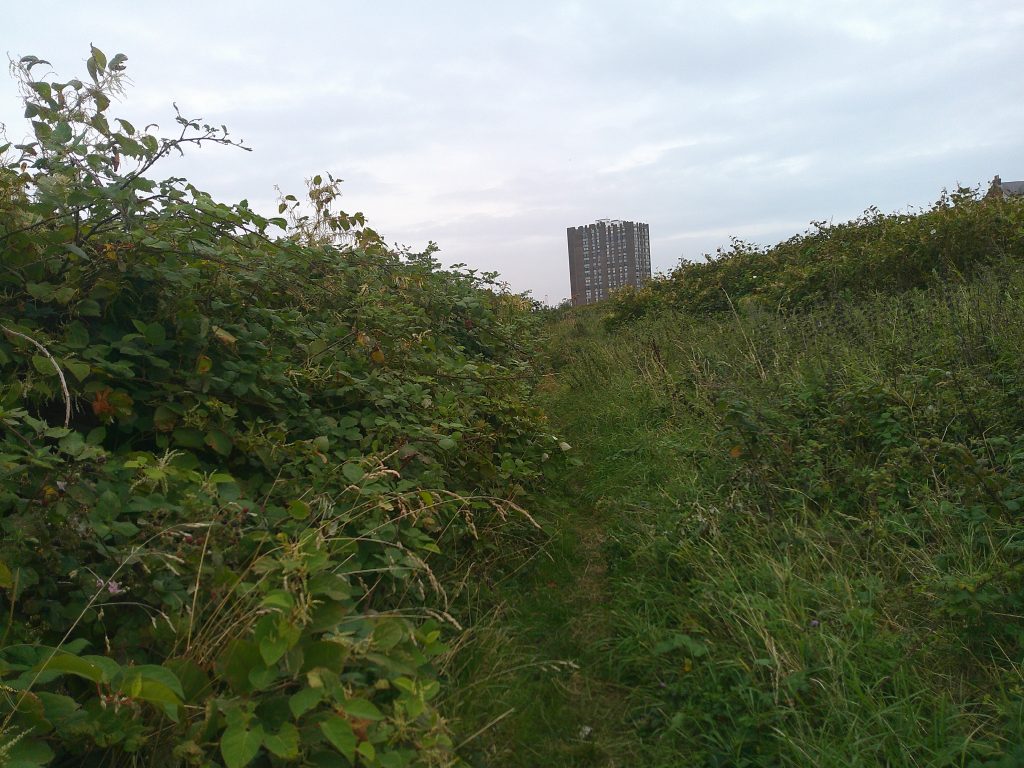
Of course, being in such close proximity to the railway guarantees that this invasive plant will migrate all the way down the railway lines. But now that the path is almost completely overgrown, nobody will see it, so who cares?
Derby Pool and the Gunsite
This was on the same walk.
I remember the space between the car park and what is now the Harvester at Derby Pool being mown regularly. It was a great place for picnics and for kids to play when the tide was high.
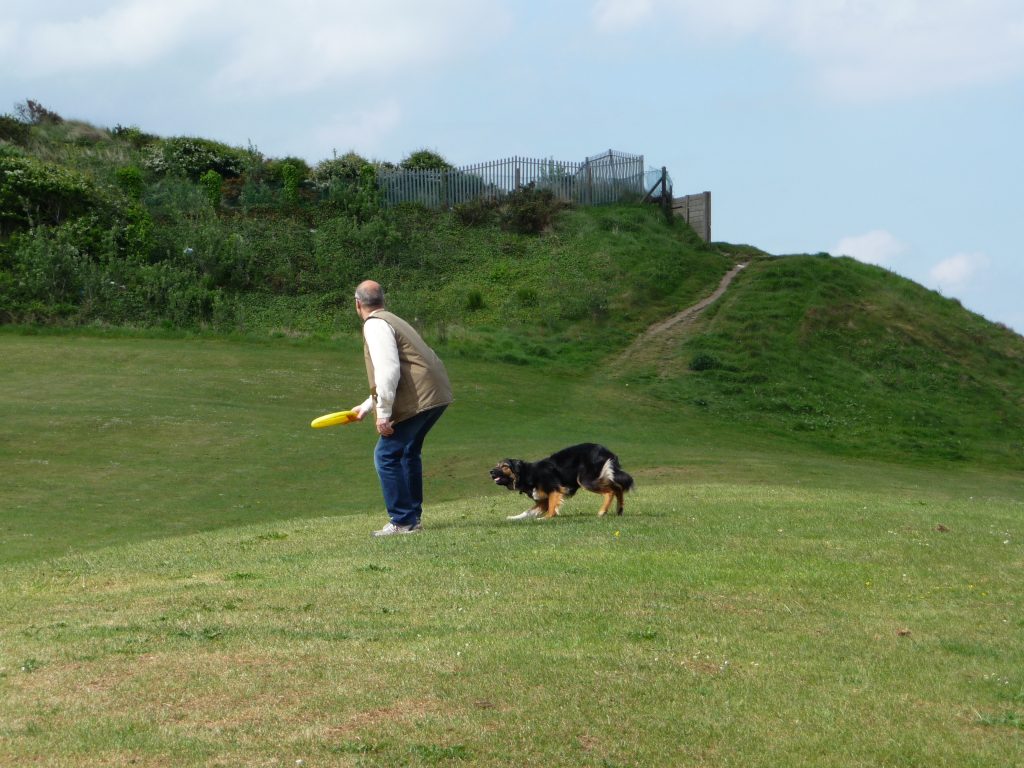
Now it is no longer mown. At best, a single path is mown through a couple of times a year. You no longer see families picnicking there or kids playing ball:
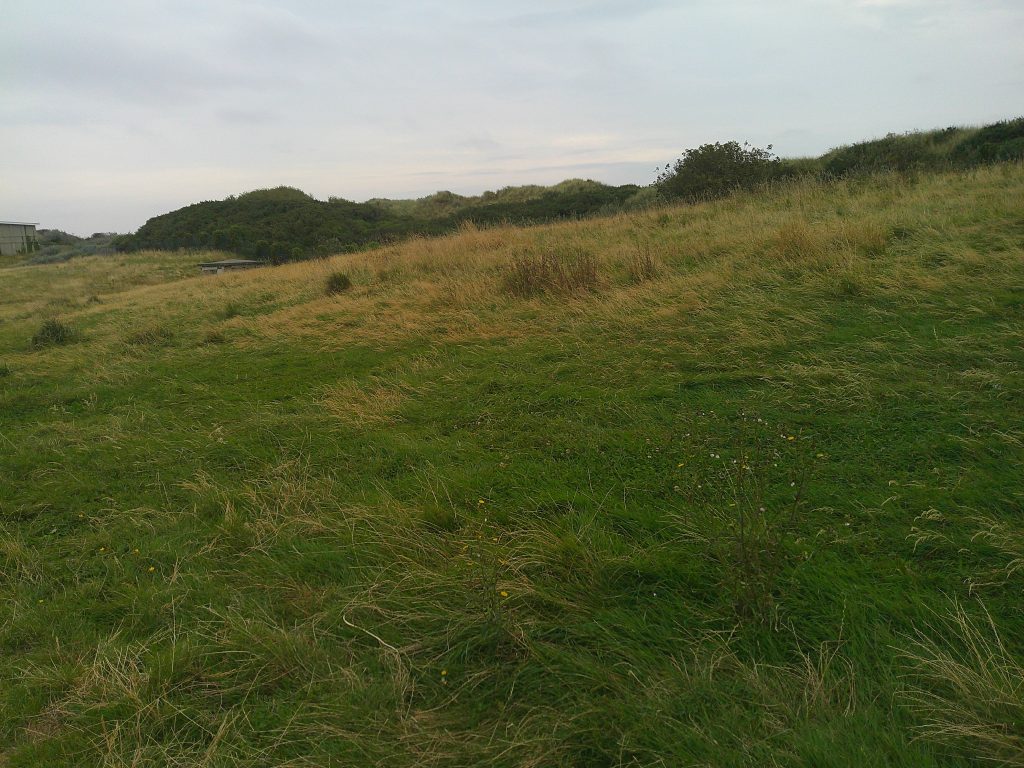
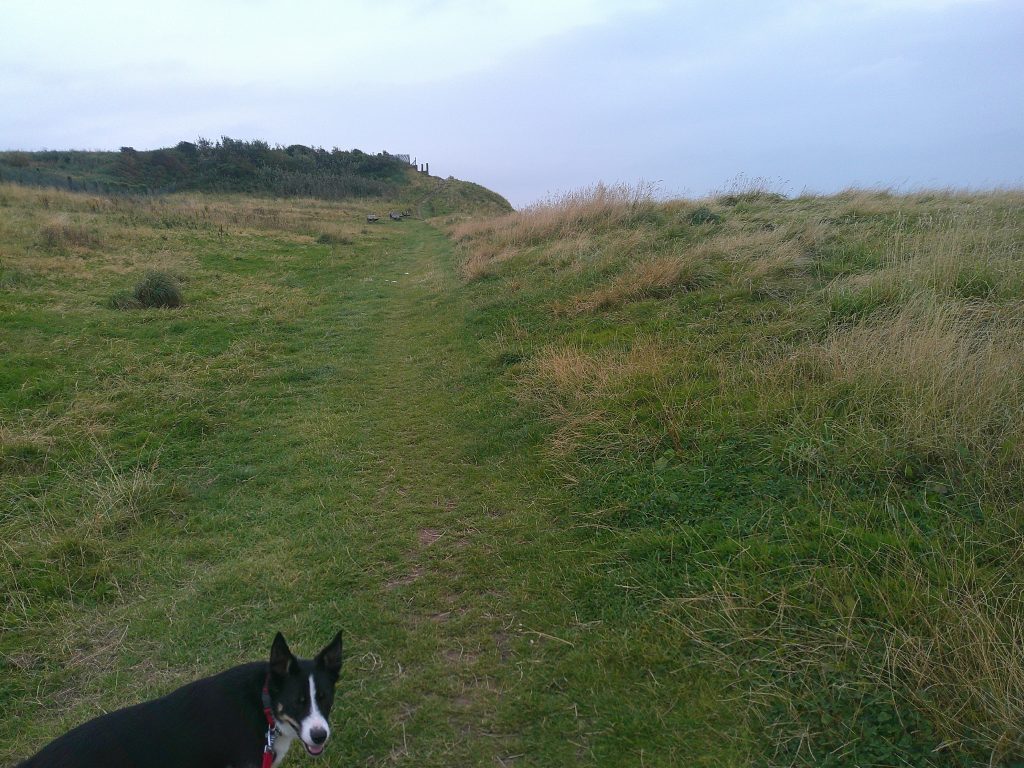
In fact, this area is explicitly designated as a rewilding area by Wirral Council, but given the extensive areas a hundred yards further on between the prom and the golf course, which have never been mown, I cannot understand the rationale behind taking away this small area as a valuable recreation area.
But if you walk further along to the Gunsite, things are even worse.
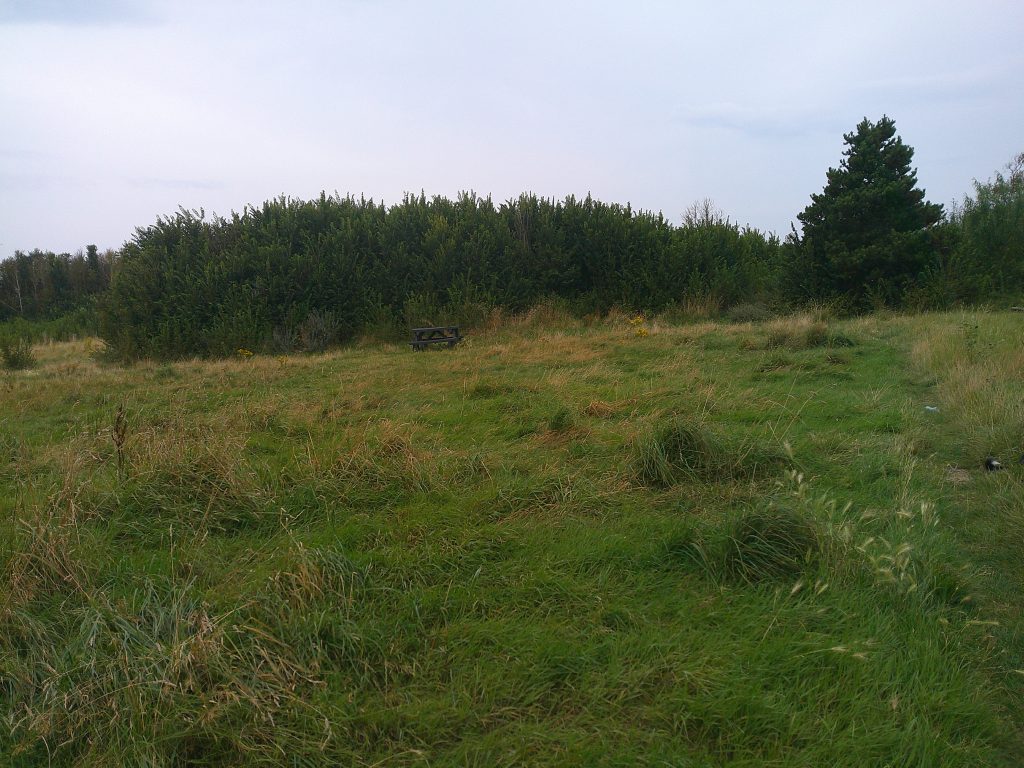
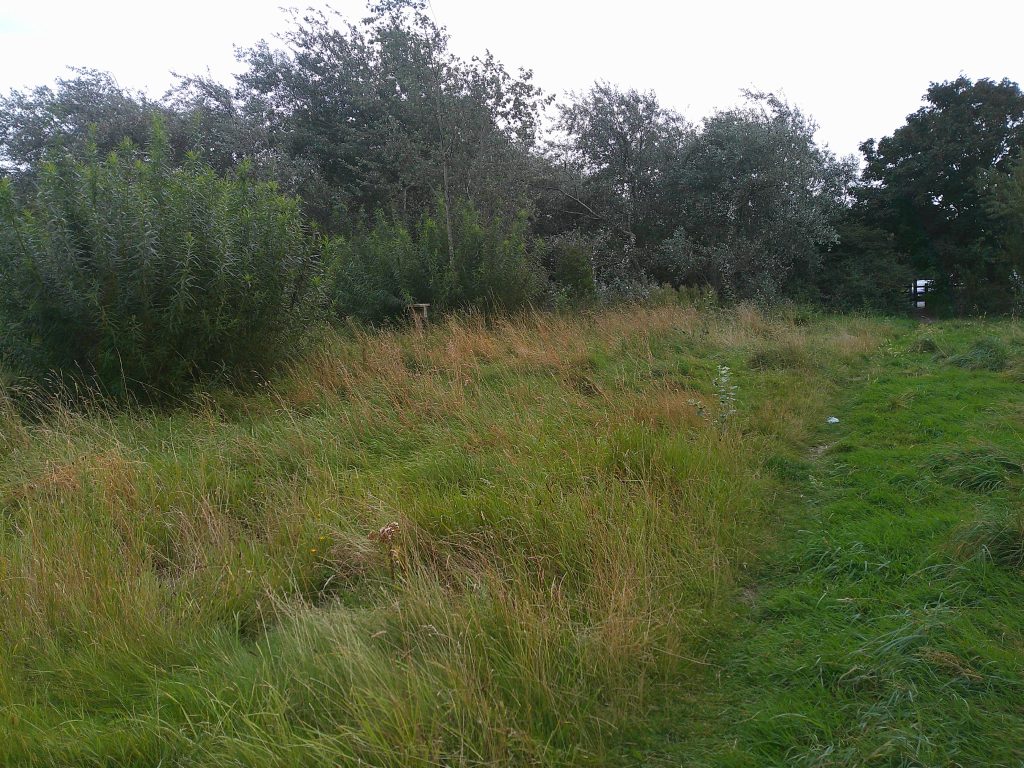
It used to be that there were a few benches dotted around the Gunsite for you to rest your weary limbs. You can still find them if you know where they are:
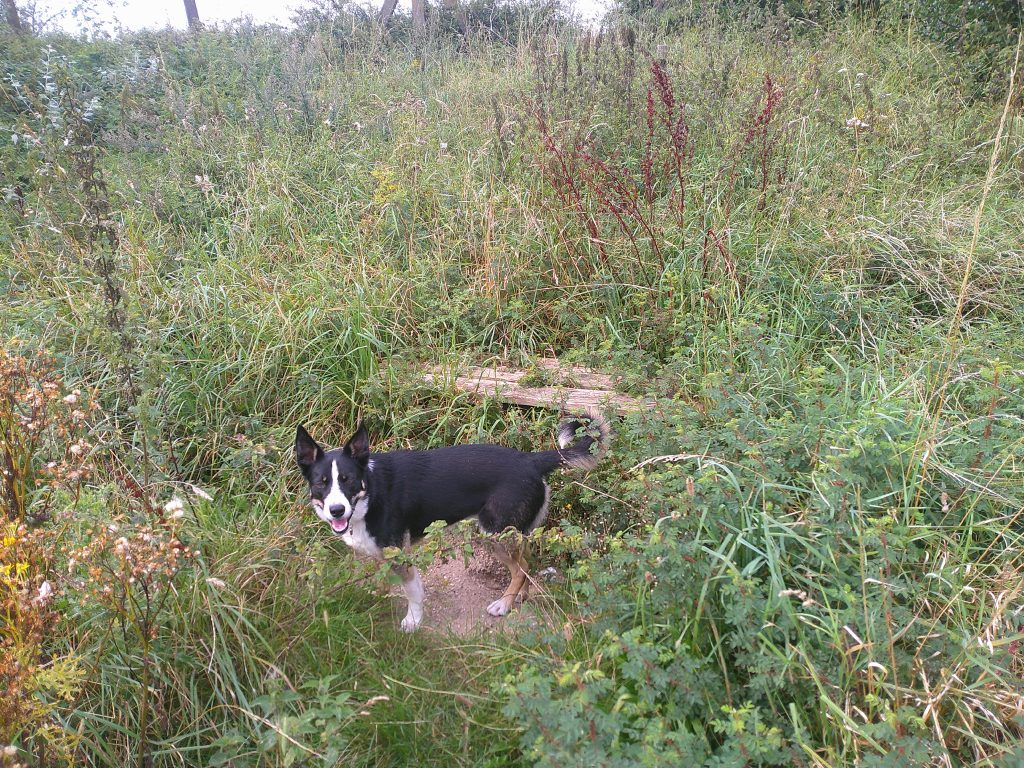
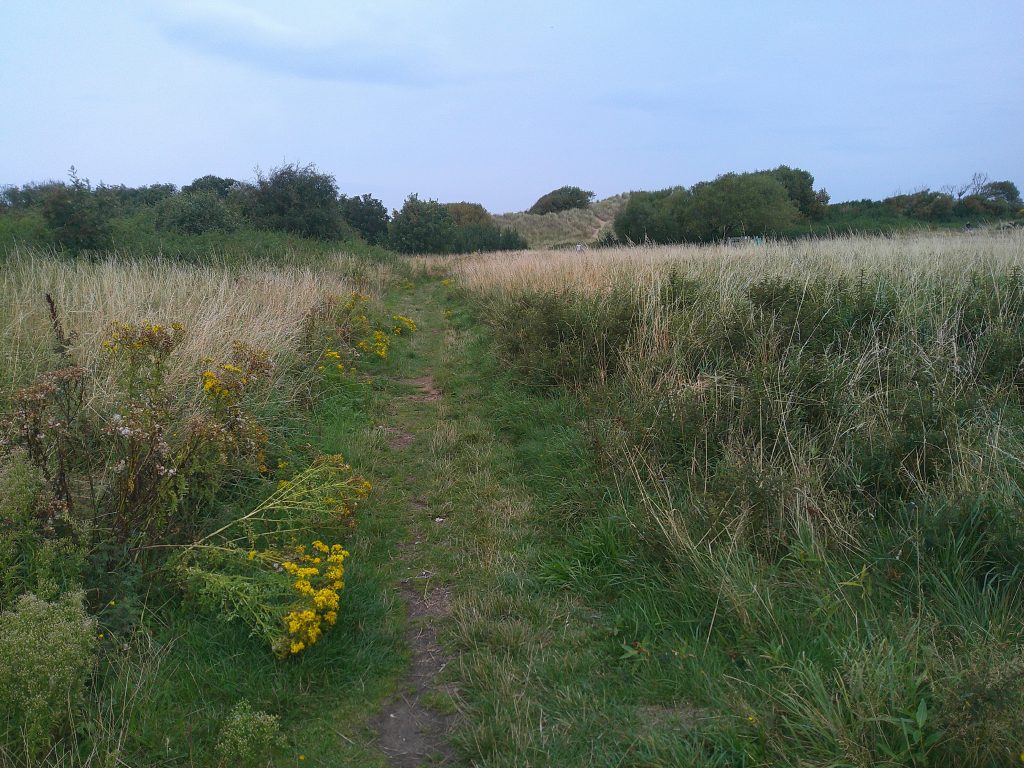
The Gunsite has always been relatively unspoilt in the fifteen or so years that I have been walking there. There were a few paths mown and a couple of picnic areas where the grass was kept short. And there were a few benches. Now, the benches have become overgrown, the picnic areas are not maintained and the paths are rarely, if ever, mown and are becoming overgrown.
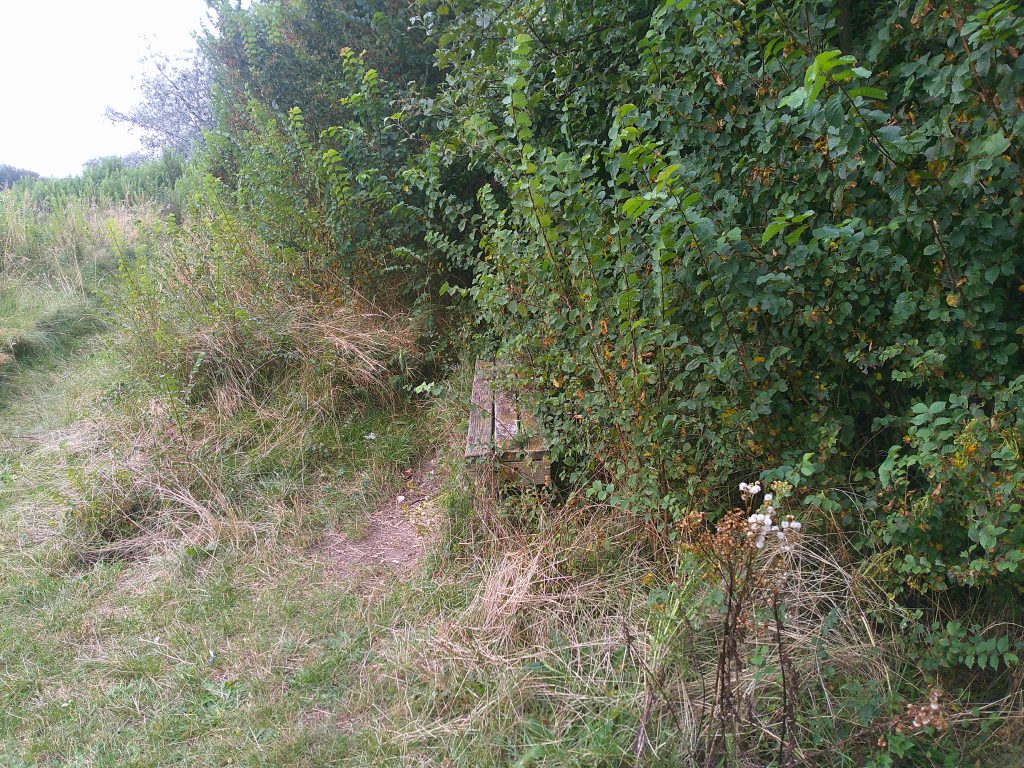
Gradually, it is getting more of a struggle to get round many of these paths, particularly with the limited vision I have. I am fortunate, I can see a reasonable amount a few feet in front of me, so I can get round. There are people far worse off than I who also want to make use of these leisure areas.
And five hours or so after most of those photos were taken, my knuckles are still tingling from the stinging nettles I walked into on the “paths”.
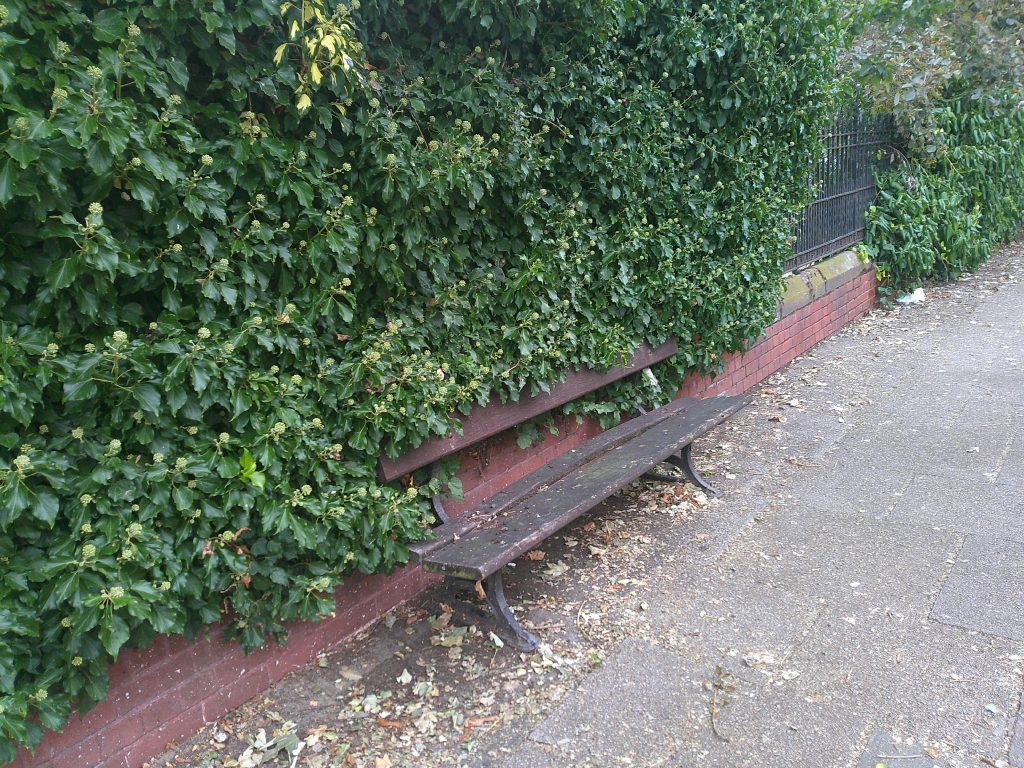
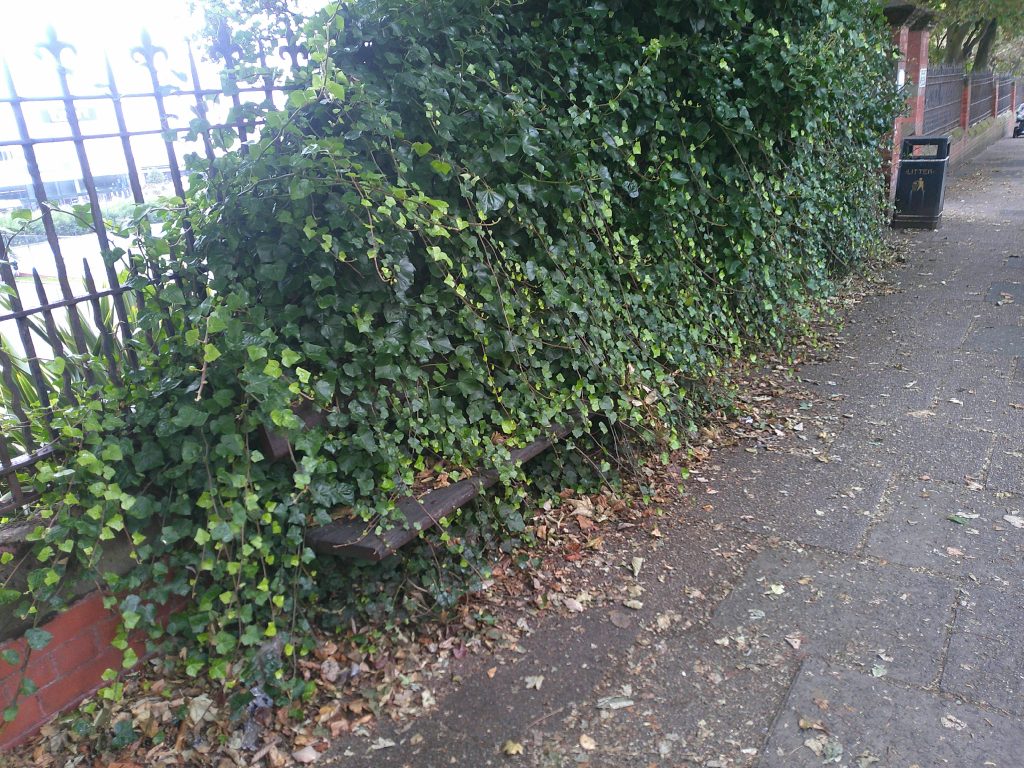
But before we leave today’s walk, here’s a couple of photos I took on Wellington Road in New Brighton. One of these benches is not going to be giving anybody somewhere to rest any time soon, and the other is rapidly heading the same way:
Bidston Moss
Bidston Moss is the site of the old landfill site. I hope to delve into the history of the site a little in a future post, but that will have to wait. The site closed in 1995 and what we see now is the result of nature taking back the land over the course of 30 years.
Before I show you a few photographs of the reality of this landfill restoration project, read the following from the Merseyside Recycling & Waste Authority (https://www.merseysidewda.gov.uk/closed-landfill-sites/). I have marked a few passages in red that I would take issue with.
CASE STUDY: Bidston Moss Community Woodland (Wallasey Bridge Road, Wirral) – The landfill site at Bidston Moss has undergone major restoration work since closure in 1995. Hundreds of trees have been planted, wildflower meadows have been sown and boardwalks installed, all joined by a network of pathways.
The restoration works commenced with the importation of soil forming materials, principally paper pulp from the Bridgewater paper recycling plant in Ellesmere Port. The paper pulp was mixed with soil and spread across the site. Tree planting started soon afterwards, under the guidance of Groundwork Wirral, and the woodland is now well established and features a mixture of tree species (including ash, alder, willow and oak).
The Community Woodland is now managed by the Forestry Commission (www.forestry.gov.uk) under the Newlands scheme. It is linked to the National Cycle Network route 56, (www.sustrans.org.uk) by means of the bridge that spans the railway line which leads to New Brighton. The woodland is clearly visible from the M53 motorway. The site is easily accessible from both the Bidston and Birkenhead North railway stations.
The woodland is surrounded by a four metre wide, tarmacced, perimeter track. This surface is ideal for both pedestrians and cyclists, and has been marked accordingly. This track is approximately 2.2 kilometers long. A network of paths crosses the remainder of the site, and these too are suitable for both pedestrians and cyclists. In addition a mountain bike track has been installed on the higher slopes of the site.
The pond on the site has been developed with angling in mind (for more information contact wirralangling@aol.com). Boardwalks constructed from recycled plastic have been installed along the north and west slopes of the pond. Organisations wishing to use the site should contact the Forestry Commission (www.forestry.gov.uk).
That description makes the former landfill site seem idyllic, and when I first started walking there in around 2012 or so, it was very pleasant. But things have changed.
First and foremost, I would take issue with the claim that “The Community Woodland is now managed by the Forestry Commission”. For many years now, I have seen little or no sign of any “management” to speak of.
We read above that “wildflower meadows” were planted. It is possible that there were once wildflower meadows on Bidston Moss, but these have long since become overgrown by more invasive plants:
The reality is that wildflower meadows need maintenance. If they are not cut or cropped by grazing animals a few times a year, they will be lost to the more aggressive plants such as brambles, nettles, cow parsley and so on. That’s a fact of life. There was never any point sowing meadows on Bidston Moss if there was never any intention of maintaining them.
So what else do we read above? Ah, boardwalks were installed at the banks of the lake. And indeed they were. Back in the day, you could walk on the boardwalks along much of the west side of the lake, but these were vandalized, burned down or simply rotted away probably 8 or 9 years ago. You can still see a few remnants of them, but they are hardly a “feature” any more.
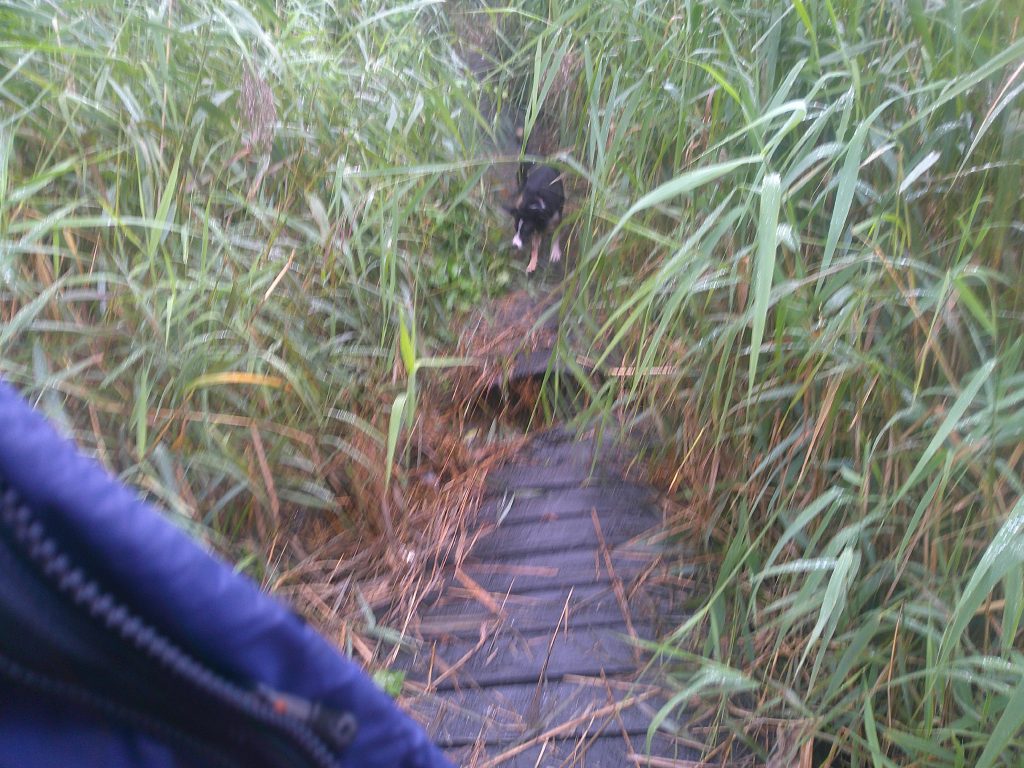
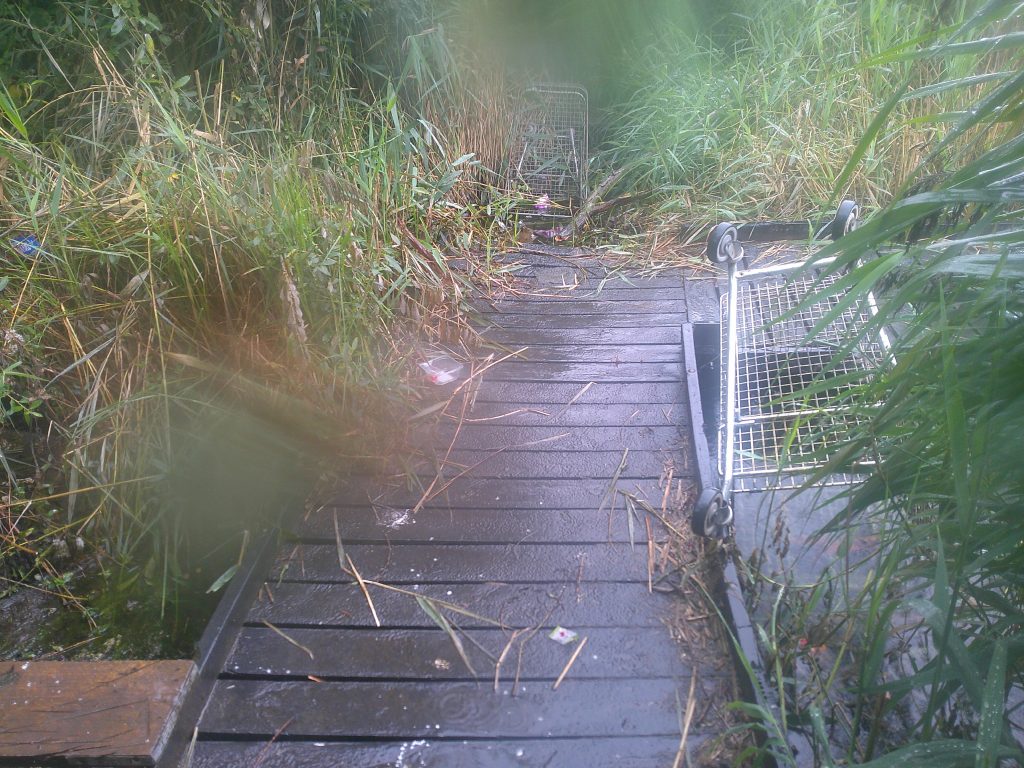
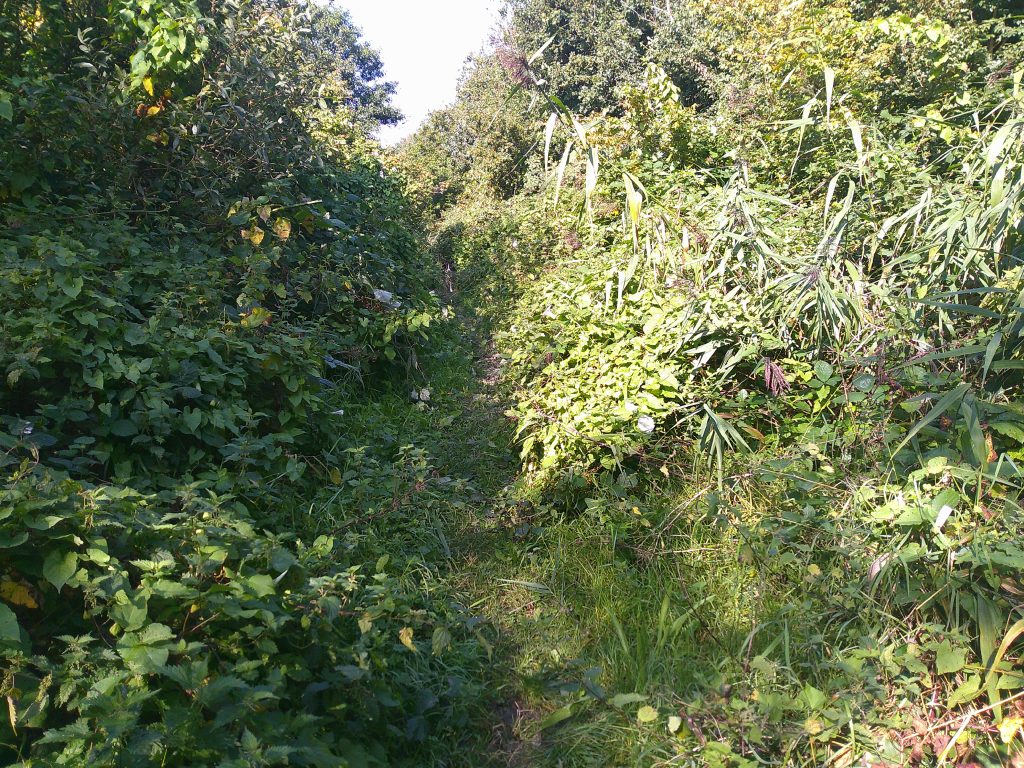
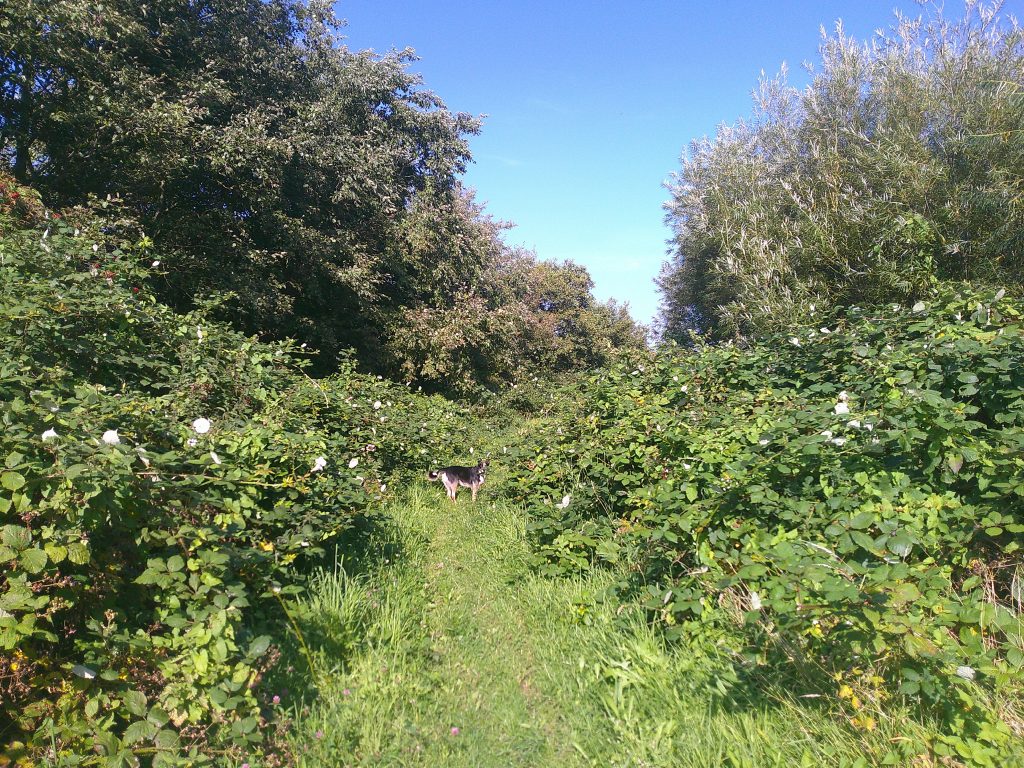
So what else? Oh, a network of pathways, all wide enough for cyclists and pedestrians. Here are some of those pathways:
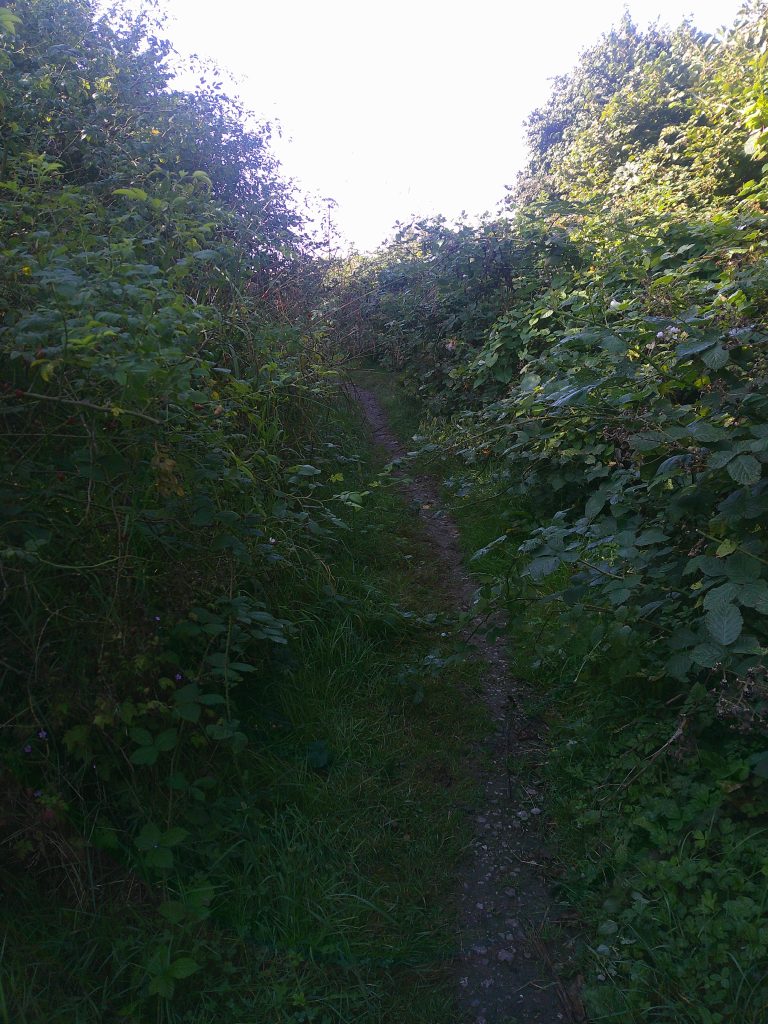
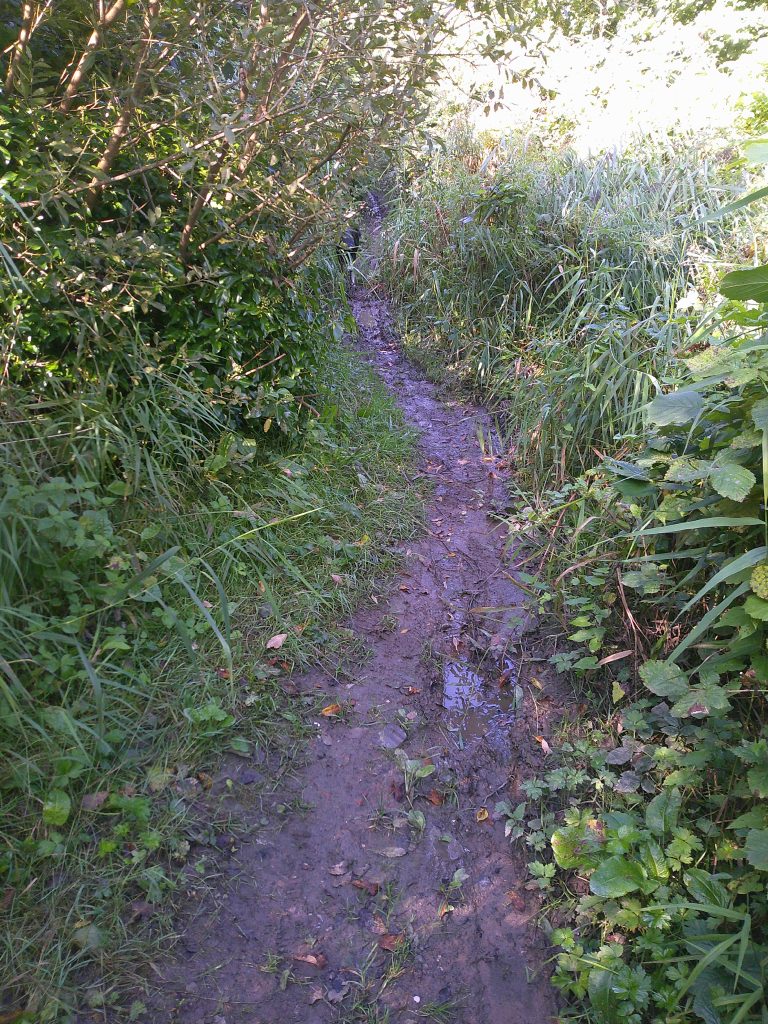
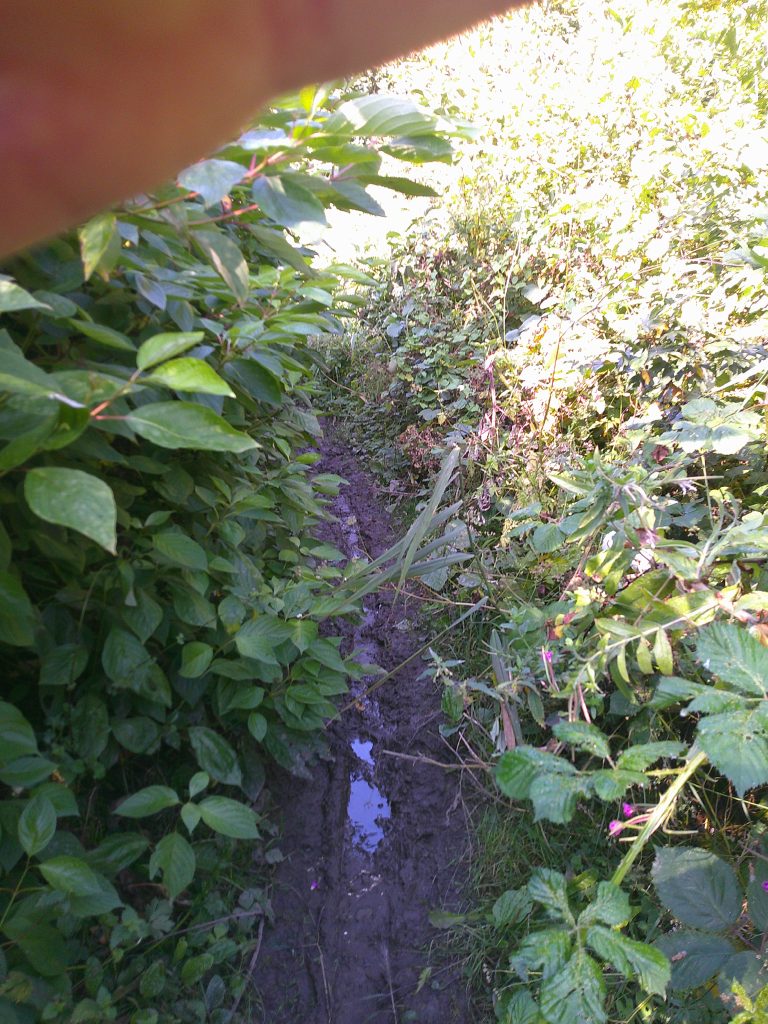
The next three are another pathway down to the footbridge. Again, it used to be comfortable for two people side by side. Over the past few years, the motorbikes have churned it up so badly that it is pretty well impassable.
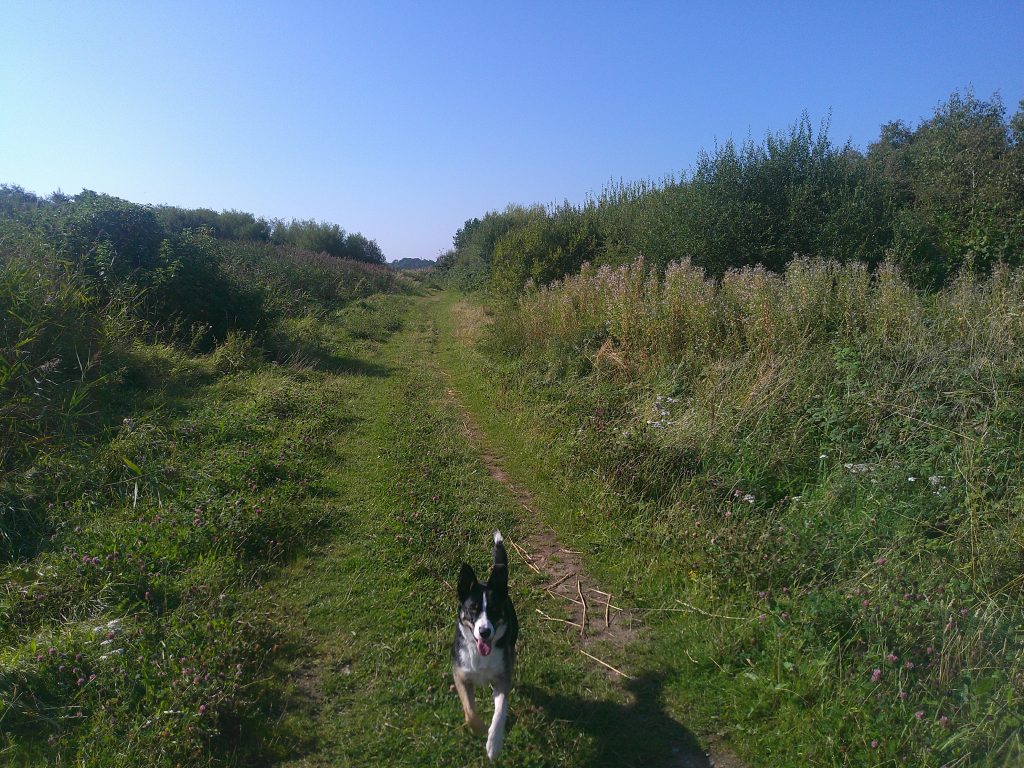
But even the main four or five paths over the site, which used to be at least around 6 metres wide and mown every few months have now shrunk, in places to a size where people can barely walk two-abreast:
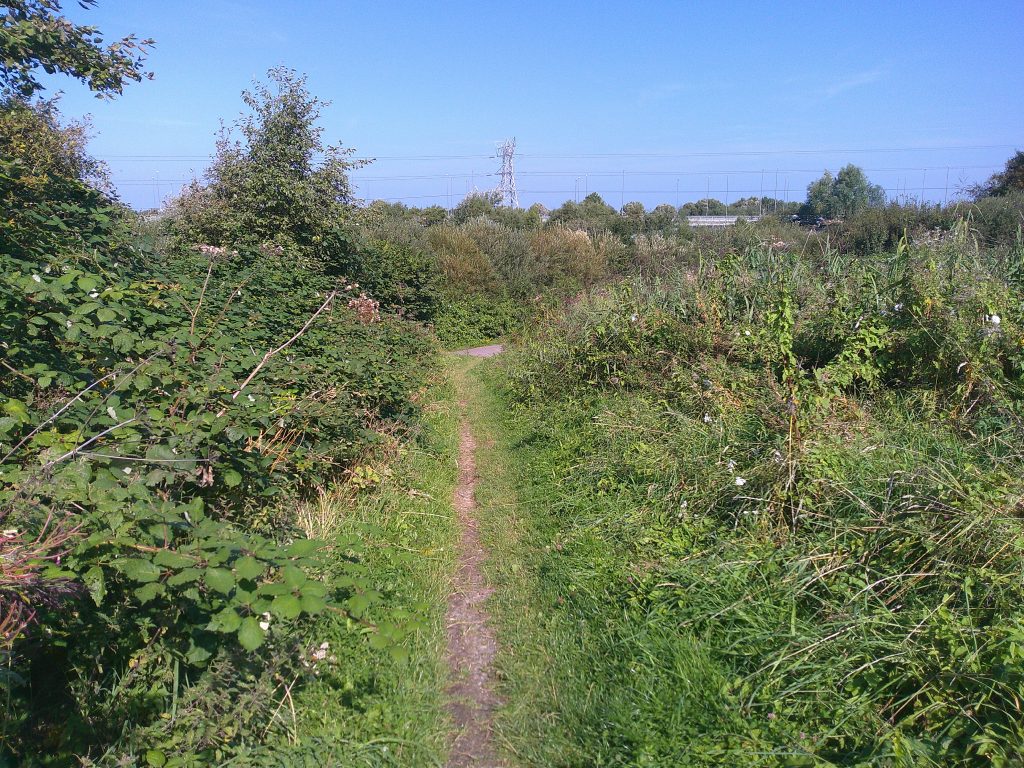
The tarmac path around the entire perimeter of the site was mentioned by the Merseyside Recycling & Waste Authority above as being 4 metres wide and marked for pedestrians and cycles. This is the reality nowadays:
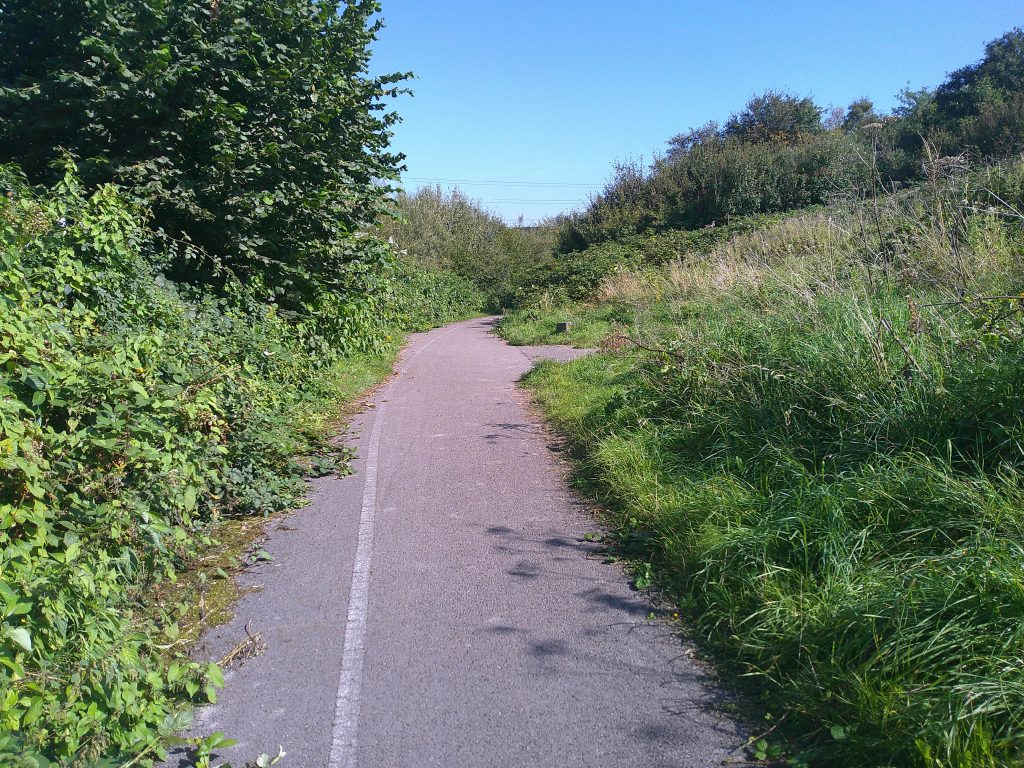
I am afraid that the reality of this “community woodland” project is very different from what it is still sold as. Over the years that I have been walking there, the amount of maintenance done has become ever less, and this year, the only evidence I have seen of any maintenance is that access to the methane monitoring pipes has been re-established.
Oh, and here is another defunct place to sit down:
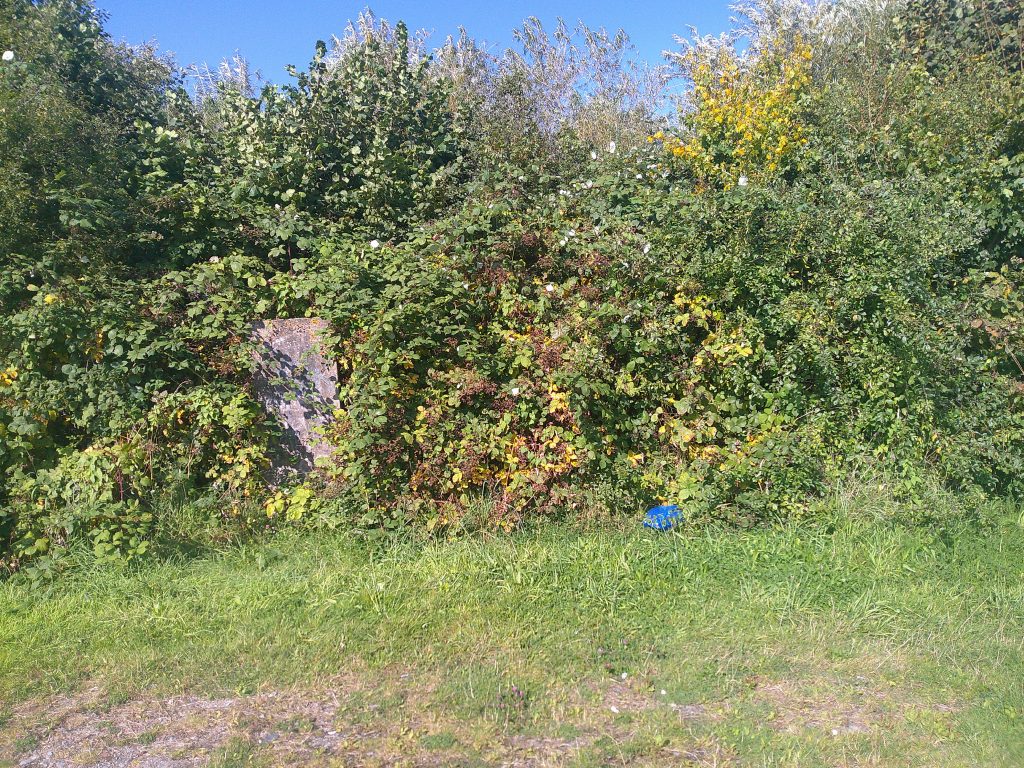
If you don’t believe me, the image at https://www.lomography.com/photos/21309962 shows some installation art built on that very bench about 7 or 8 years ago:
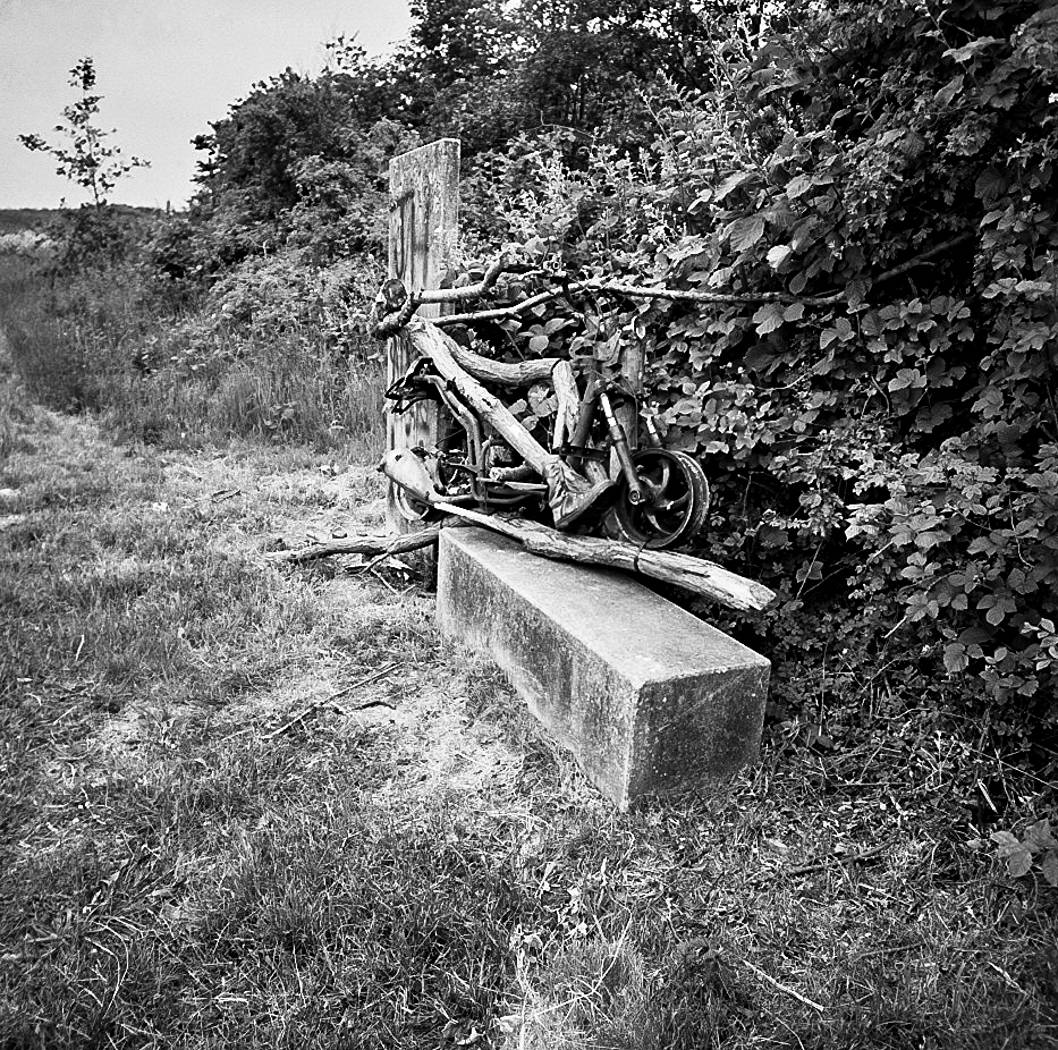
Over the years, I have encountered ever fewer people simply enjoying Bidston Moss. Quite frankly, there is ever less to enjoy. Even the dog walkers, who used to flourish up there, seem to be becoming ever rarer. The number and variety of waterbirds on the lake has fallen dramatically in the past 4 or 5 years, and I strongly suspect that it is the result of a failure to manage the stocks of fish in the lake, but there may be any number of other reasons.
This was meant to be a flagship project in landfill regeneration, and only a dozen years or so ago, Bidston Moss was a delightful place. Now it is turning into an impenetrable wilderness. But the dogs enjoy it!
Edit: 5th September
As luck would have it, a couple of days after posting this, I was walking Mabs on Bidston Moss and a couple of workmen were there mowing. I spent a good while talking to them and they insisted that Bidston Moss is mowed once a month. But none of the dog walkers I have talked to can remember it being done more than once this year. Be that as it may, the two men were perfectly nice and said to me that they have repeatedly requested tractors with side arms to cut down the encroaching vegetation, but without success.
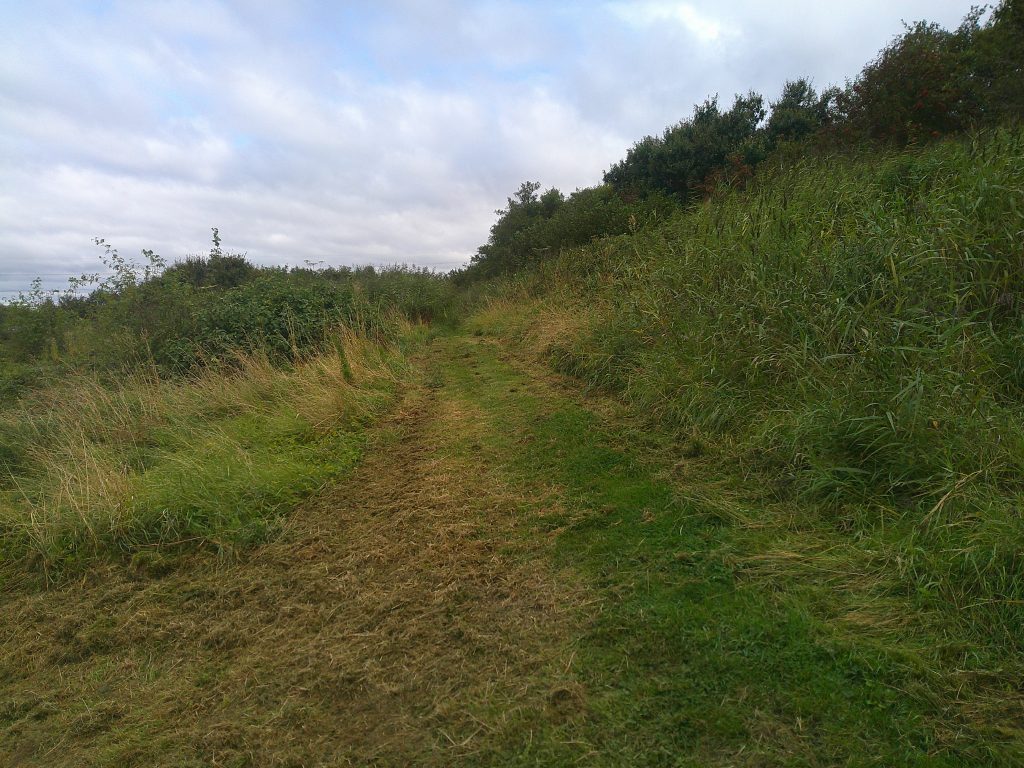
And herein lies the problem. It is all very well cutting the grass underneath the encroaching vegetation, but unless the vegetation is cut back, the path will be lost. Here are some pictures after mowing:
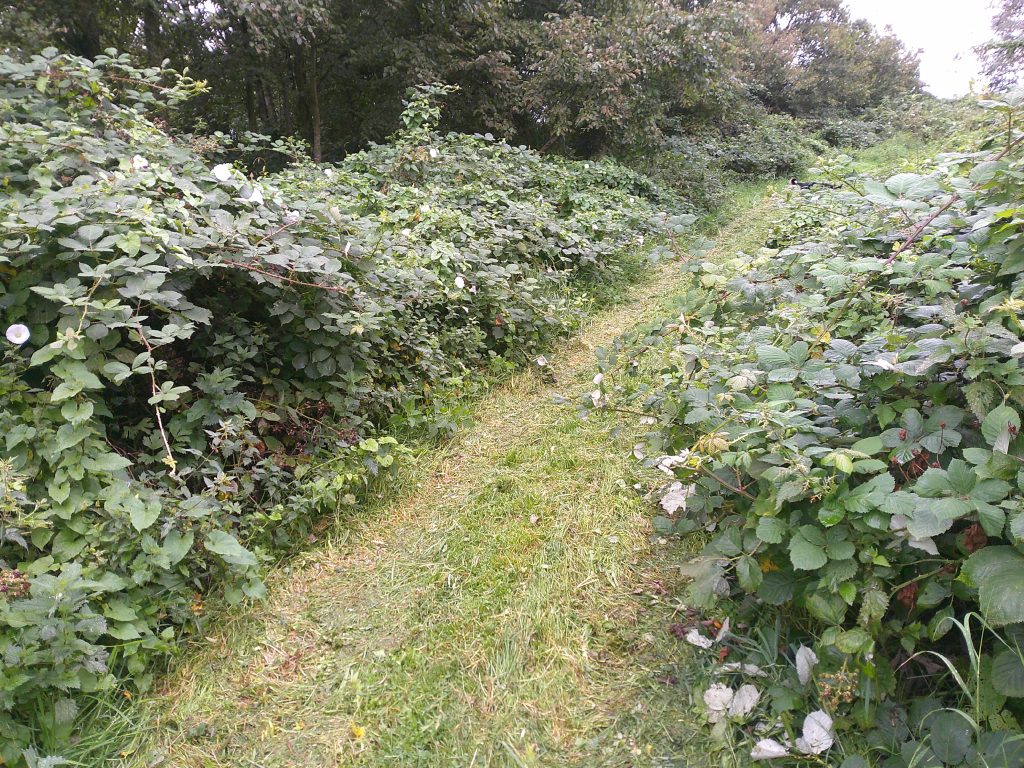
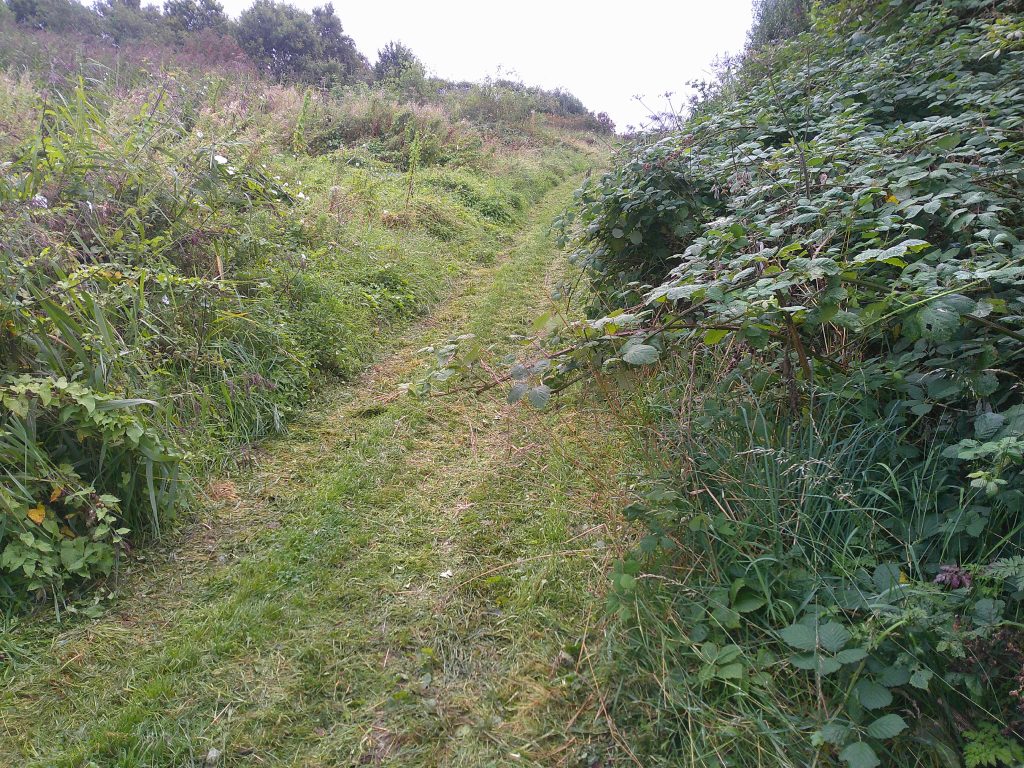
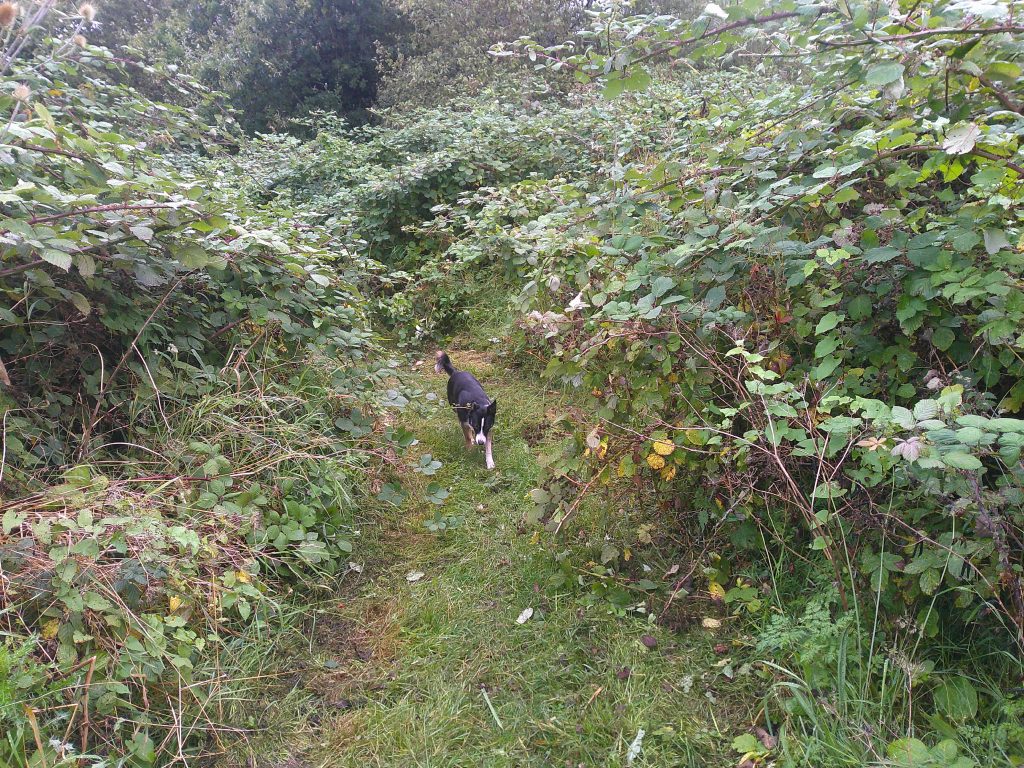
To help anybody who knows Bidston Moss identify the paths I am talking about, here is a map taken from the original plans for the restoration of Bidston Moss (http://www.newlandsproject.co.uk/sites/default/files/Bidston%20Moss%20Context%20Plan_0.pdf). I have marked the various paths I talk about with A, B, C and D.
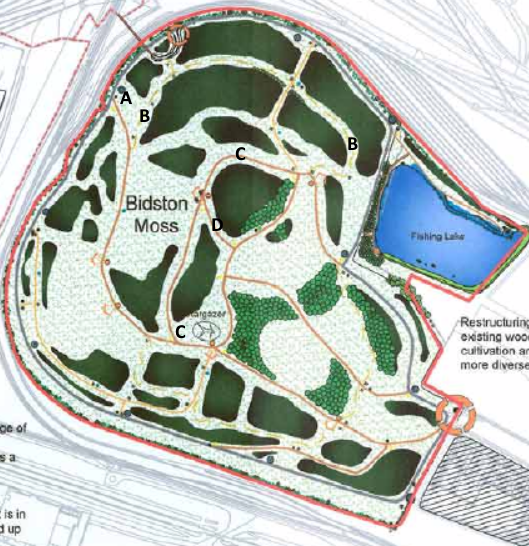
B: Small paths to footbridge (now almost lost)
C: Top circular path (okay, it’s a rectangle, but you go round it)
D: “Middle” path which I expect to be lost by next year
Cross Lane
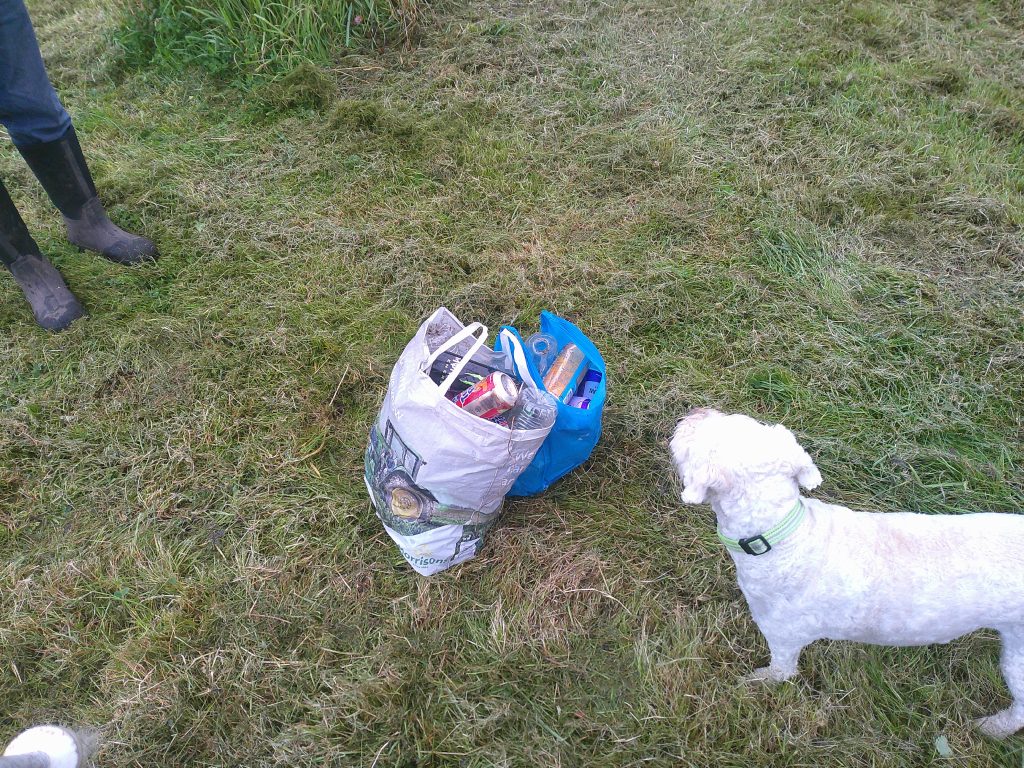
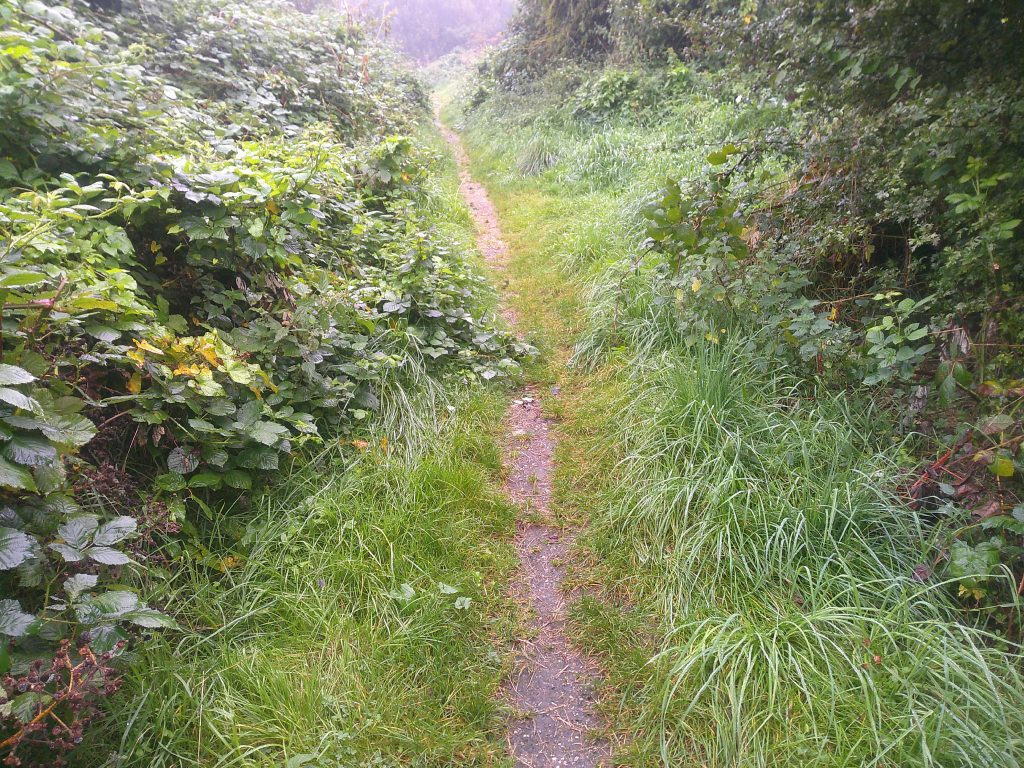
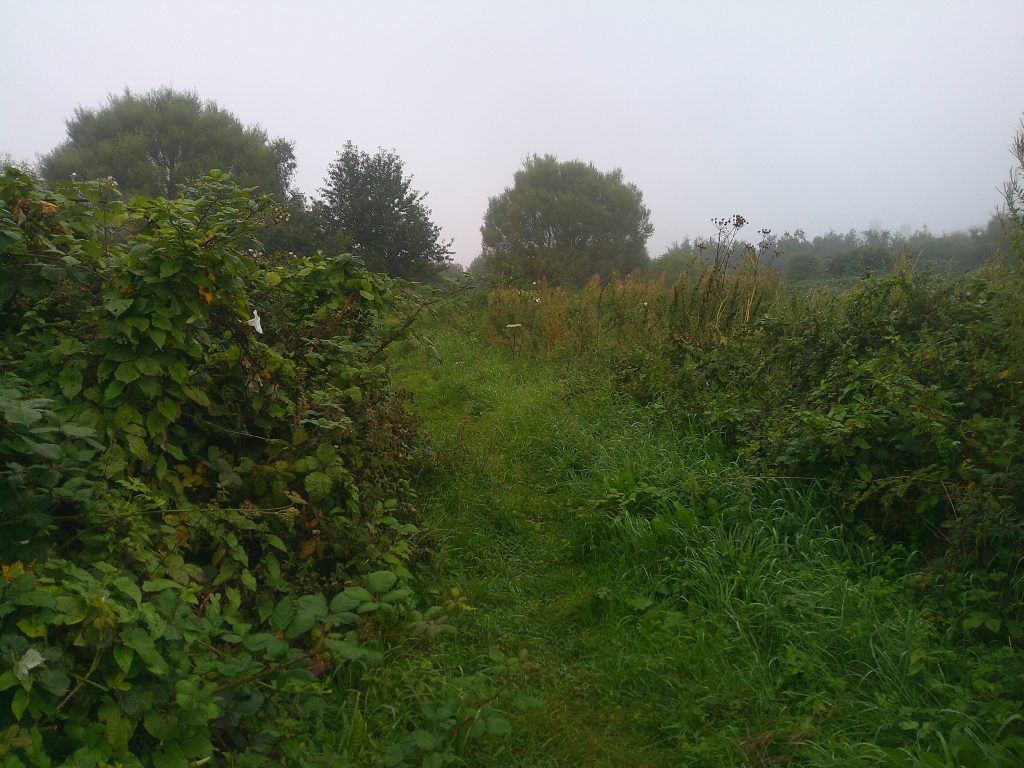
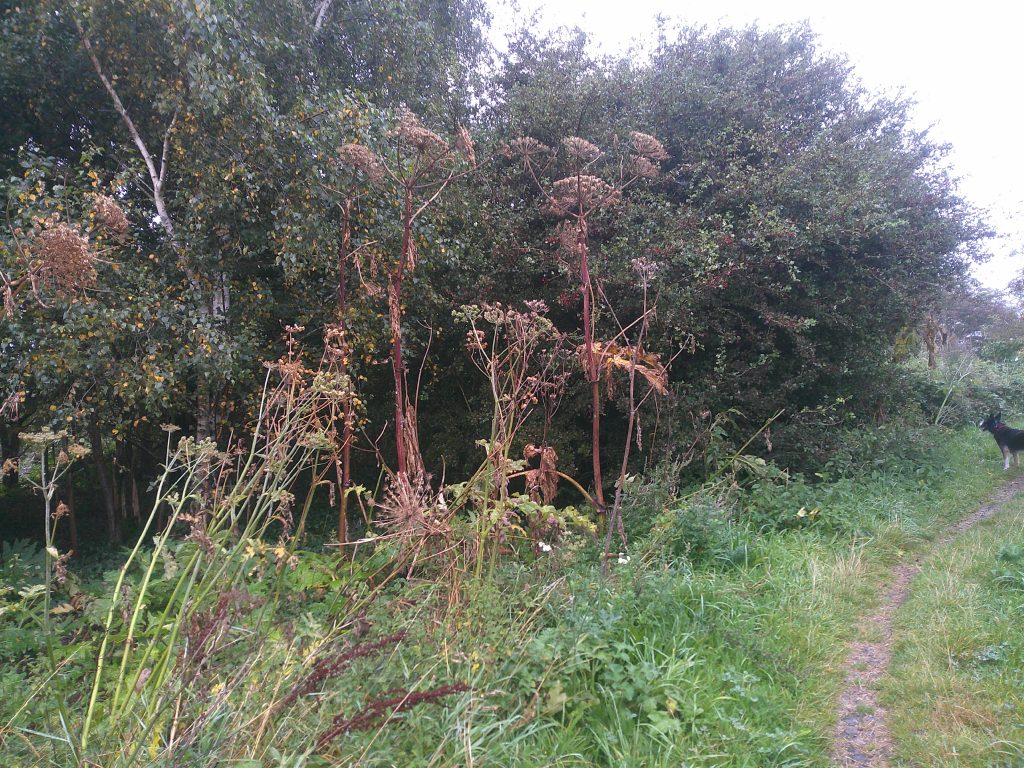
The Cross Lane site is connected to Bidston Moss by a couple of paths. I have heard that the Cross Lane site was the former landfill site for Wallasey Council before the establishment of the Wirral Metropolitan Borough Council, and that Bidston Moss was the landfill for Birkenhead Council. This could well be the case, as both sites date back to the ’70s. But I am happy to be corrected if anyone knows better. Either way, the history of the two sites is very similar, as is their current fate, and I shall simply post a couple of photos to make the point.
Elleray Park
Elleray Park is relatively local to me, but the comments I have apply to pretty well all the parks in the borough.
I am not privy to the undoubtedly complex and sophisticated decision-making process that governs the frequency with which any given park in the borough gets mown. All I am certain of is that two things have changed over the past years.
Firstly, we have seen the introduction of “No-Mow-May”. This suggests that any given park will not be mown for a month. Wrong. It seems to me that most parks without designated sports pitches are only mown every six weeks or so at best (whatever the Wirral Council website says – see below). And that means that if there is no mowing in May, it could well be ten weeks between mowings in the fastest growing season of Spring. By mid-June, many of the areas that kids would want to use for kicking a ball around are completely overgrown. Don’t misunderstand me. I really don’t have a problem with no-mow-May. It is a genuinely beneficial way to increase the numbers of insects and, in particular pollinators. It is a good thing. But when it becomes a period so long that it makes vital recreation space unusable, it is counterproductive, and what is in itself a good and worthy movement will not be able to take the public with it.
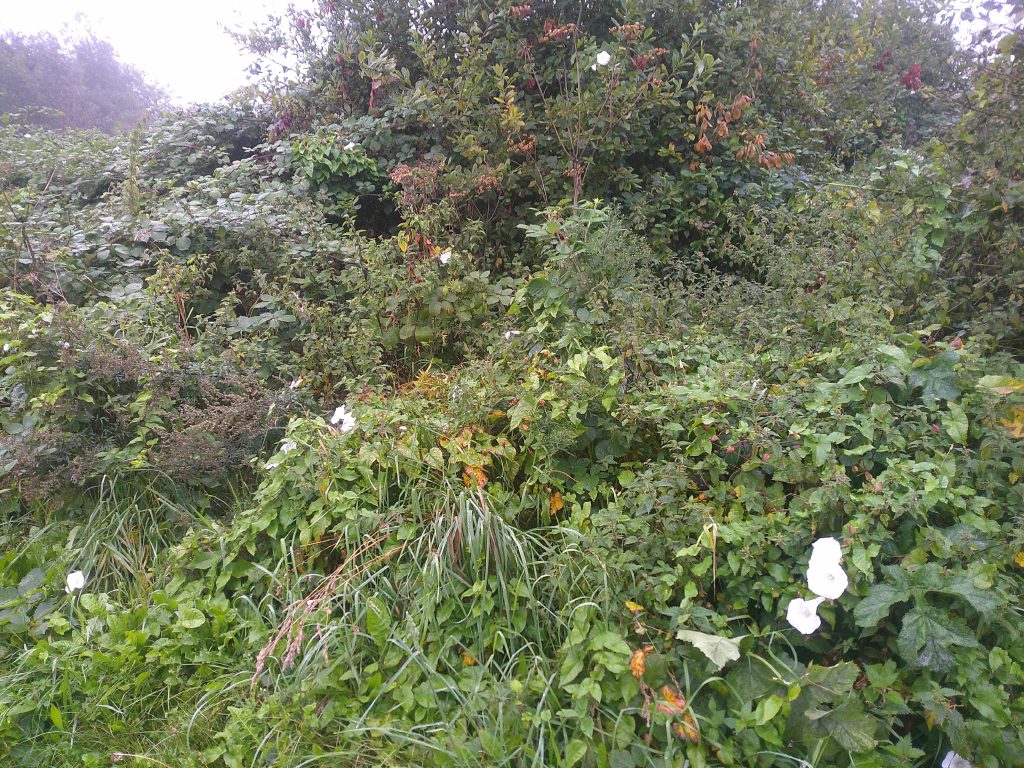
Secondly, large parts of many parks are no longer mown as they were a few years back. The next couple of photos show Elleray Park:
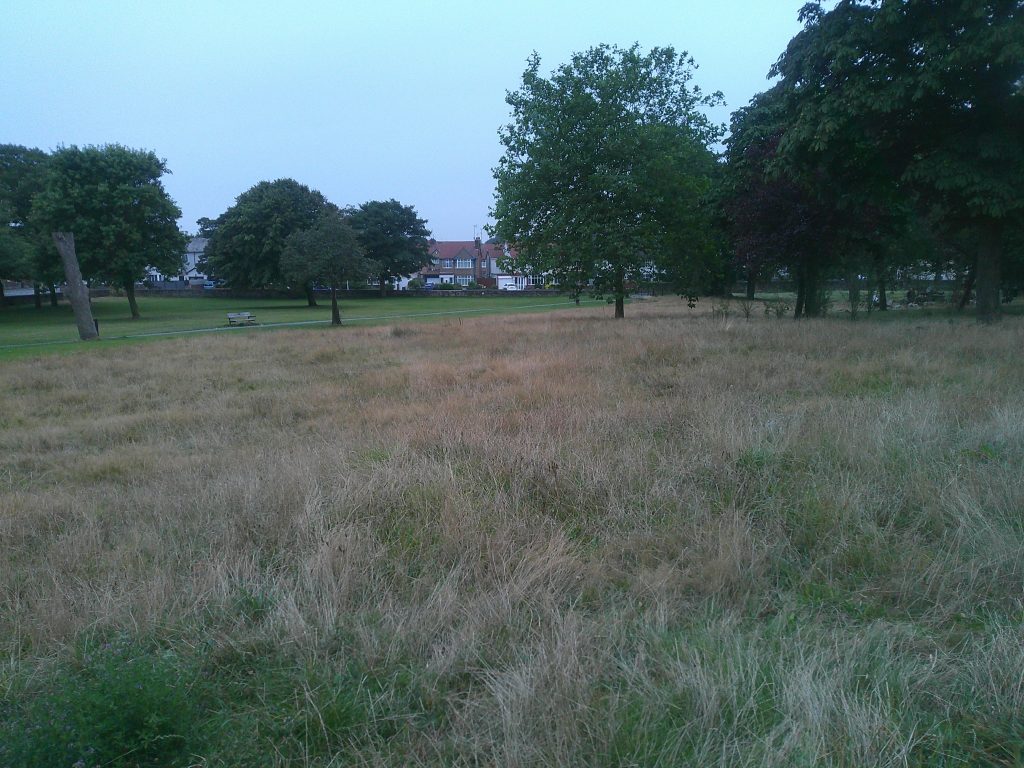
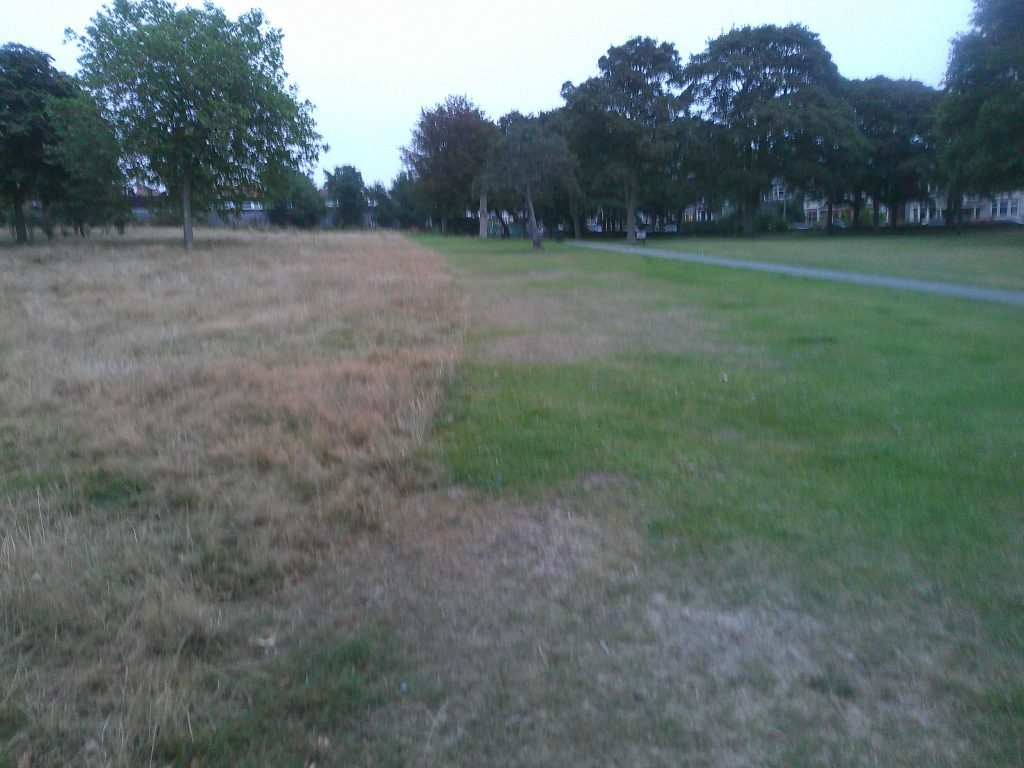
In essence, the bottom, flatter area of the park has been mown, even under the trees, while the upper area, which is inclined slightly is not mown. The problem here is that, when far more of the park was mown, there used to be a natural separation of user groups. Kids playing football or other ball games generally kept to the bottom half of the park. People playing with their dogs or allowing their dogs a game of chase kept to the top of the park, and there was plenty of space to sit under a shady tree in the summer. Now, all the people who use the park are grouped together on the mown space, and friction is, sadly, often unavoidable. Furthermore, the top part of the park is filthy with rubbish and dog poo. And you cannot blame the dog owners, as it is virtually impossible to find and pick up poo in long grass. If you do venture over the unmown area, you will probably end up cleaning your shoes when you get home.
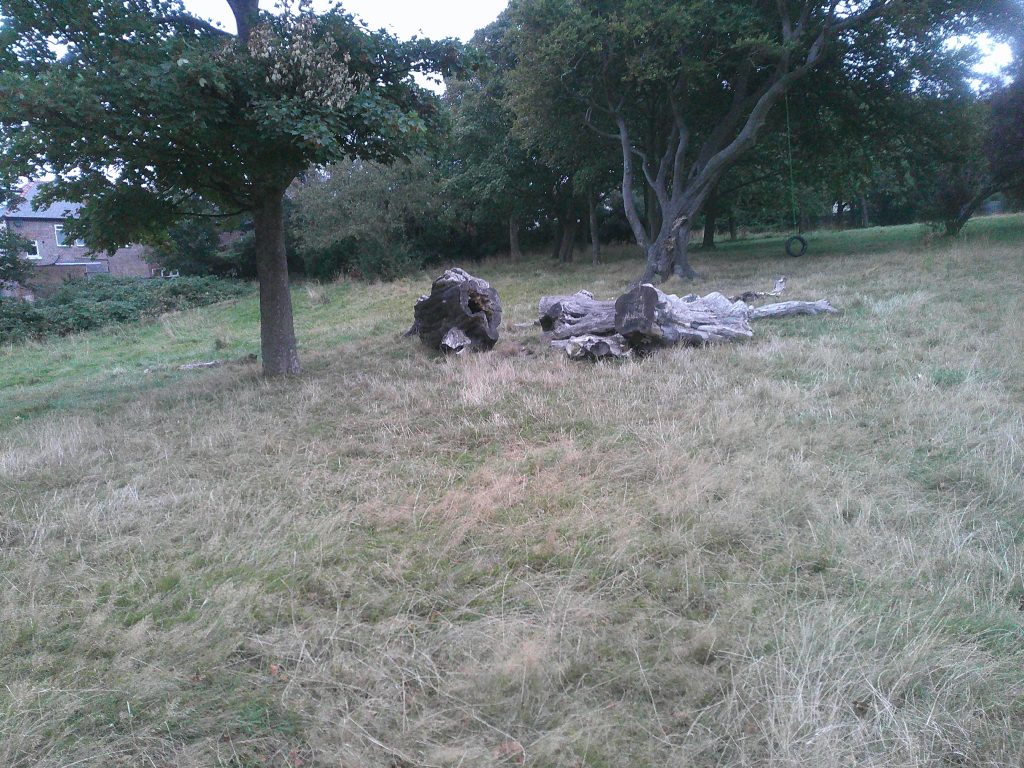
When a big tree was cut down in the park several years ago, much of the trunk and several of the branches were left as a really nice little place for sitting, having a snack and allowing toddlers to explore. The photo below was taken in September, and the grass has died back a lot. In mid-summer, you have to wade through knee-deep grass (and dog poo) to get to this area.
Anecdotally, I have heard from several parents and dog-walkers that their children have suffered insect bites on their lower legs. More seriously, I have heard that children and dogs have suffered tick bites as well. I would like to gather the statistics for the past five or six years for the number of children treated for insect bites and ticks. But it would take somebody with greater skill as a statistician than I, even if I had access to the data. I would not, however, be in the least surprised to find a significant increase in the incidence of insect bites over these years (and indeed in the number of ankle injuries among children). But that is pure speculation on my part.
Conclusion
The reduced maintenance of our green spaces is sold to us by the council and other authorities as being to enhance and protect the environment. Wirral Council has a rewilding policy explaining what areas are affected, but Elleray Park, for instance, is not included (but is still not mown as extensively as it was). The Derby Pool greenspace and The Cliff that I have discussed are both included, but as I have said, both are driving people away from spaces that served a genuine and well-used recreational resource. I cannot see any genuine environmental rationale in driving people away from recreation spaces except to save money (in which case, tell us that it is to save money). Protecting people out of the environment in urban spaces is at best short-sighted, as high-quality recreation areas are vital for the mental wellbeing of children and adults.
I really do have no problem with genuine environmental initiatives, but as far as I can judge, the issues I have raised above do little for the environment except to drive humans out of our green spaces. It is my considered opinion that we shall soon hear the argument from councillors that “nobody uses xyz as a recreation space any more, so we may as well sell it for redevelopment”.
Ultimately, all I know is that my walks with my dog have been getting far more difficult for me, far more limited and often more fraught as the users of the recreational spaces are being forced into smaller and smaller areas.